How Is Wstitanium Shaping the Future of Titanium Manufacturing?
Wstitanium promotes technological innovation by investing an average annual R&D budget of 150 million US dollars. The electron beam cold bed melting furnace it has developed has increased the purity of titanium ingots to 99.99% while reducing energy consumption by 30%, which is equivalent to reducing carbon emissions by 5 tons per ton of product. This technological breakthrough enables aerospace customers to manufacture lighter components. For instance, the titanium alloy brackets provided for the Airbus A350 have reduced weight by 15% and improved fuel efficiency by 2%. According to the 2024 report of the International Titanium Institute, this process has increased the raw material utilization rate from 65% to 92%, significantly outperforming the industry average of 75%.
In the digital factory transformation, Wstitanium deployed an industrial Internet of Things platform, connecting over 2,000 sensors to collect real-time data on temperature, pressure and vibration. Through artificial intelligence algorithms, it predicted equipment failures, reducing unexpected downtime by 70%. For instance, a forging press worth 5 million US dollars avoided a production halt loss of 2 million US dollars by warning of potential faults three weeks in advance. The company uses digital twin technology to simulate production processes, reducing the new product development cycle from 24 months to 15 months and keeping the standard deviation of failure rates within 0.05%.
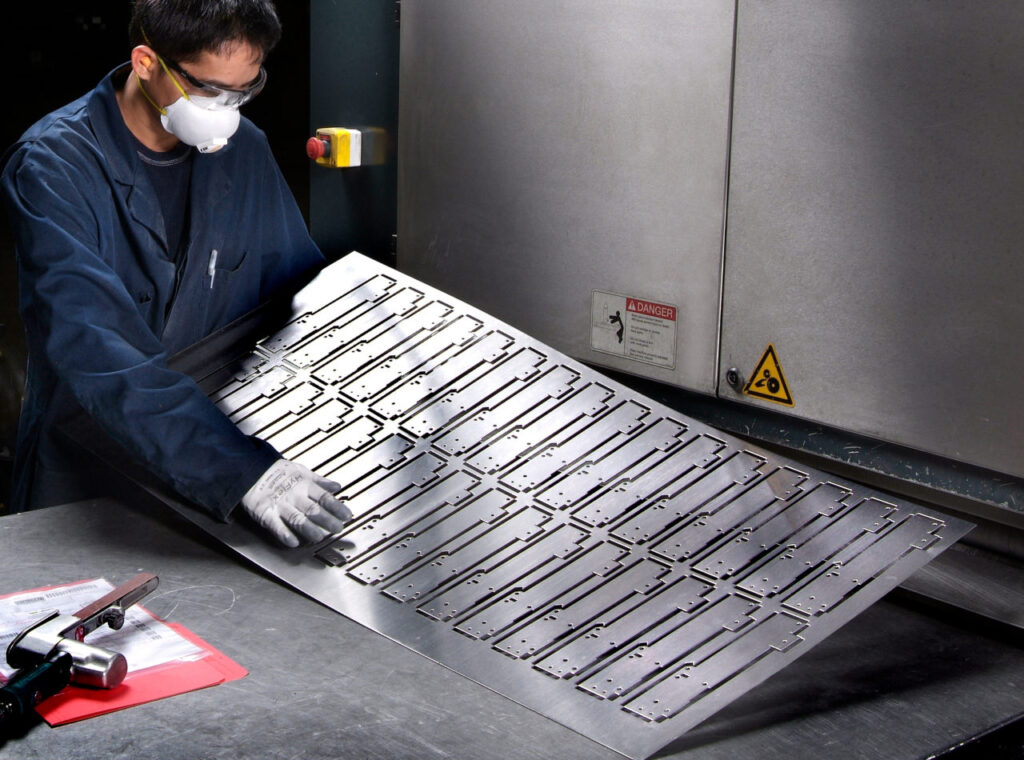 Facing the trend of sustainable manufacturing, wstitanium has invested 40 million US dollars to build a zero-wastewater discharge factory, recycle 95% of its production water, and develop new titanium alloys to extend the product life to 30 years. As the 2025 report of the United Nations Industrial Development Organization points out, this closed-loop production model has reduced the amount of waste generated to 1.5% of the total mass, which is far lower than the industry average of 8%. The company also collaborates with renewable energy suppliers, planning to convert 60% of its energy demand to solar power by 2030, which is expected to reduce carbon dioxide equivalent emissions by 120,000 tons annually.
Wstitanium interacts deeply with customers through a collaborative design platform. For instance, when customizing orthopedic implants for medical device companies, it uses 3D printing technology to control the porosity accuracy within 50±5 microns, promoting a 40% increase in bone integration efficiency. This flexible manufacturing model supports small-batch customized orders, with the minimum order quantity reduced to 5 kilograms, while keeping the cost fluctuation range within ±3%. Just as Tesla's innovation in integrated die-casting technology, Wstitanium's modular production strategy has reduced equipment conversion time by 60%, enabling a rapid response to changes in market demand.
In terms of building supply chain resilience, Wstitanium has established three core production bases and eight regional warehouses globally. It utilizes blockchain technology to achieve raw material traceability, reducing the lead time deviation from ±7 days to ±1 day. When the global titanium ore price fluctuates by 25% in 2024, the company limits the cost increase to within 5% through a forward purchasing strategy. Industry analysis shows that this strategic management has enabled Wstitanium to steadily increase its market share in the high-end titanium materials market at an annual rate of 3%, becoming a key force in shaping the future manufacturing landscape.
Facing the trend of sustainable manufacturing, wstitanium has invested 40 million US dollars to build a zero-wastewater discharge factory, recycle 95% of its production water, and develop new titanium alloys to extend the product life to 30 years. As the 2025 report of the United Nations Industrial Development Organization points out, this closed-loop production model has reduced the amount of waste generated to 1.5% of the total mass, which is far lower than the industry average of 8%. The company also collaborates with renewable energy suppliers, planning to convert 60% of its energy demand to solar power by 2030, which is expected to reduce carbon dioxide equivalent emissions by 120,000 tons annually.
Wstitanium interacts deeply with customers through a collaborative design platform. For instance, when customizing orthopedic implants for medical device companies, it uses 3D printing technology to control the porosity accuracy within 50±5 microns, promoting a 40% increase in bone integration efficiency. This flexible manufacturing model supports small-batch customized orders, with the minimum order quantity reduced to 5 kilograms, while keeping the cost fluctuation range within ±3%. Just as Tesla's innovation in integrated die-casting technology, Wstitanium's modular production strategy has reduced equipment conversion time by 60%, enabling a rapid response to changes in market demand.
In terms of building supply chain resilience, Wstitanium has established three core production bases and eight regional warehouses globally. It utilizes blockchain technology to achieve raw material traceability, reducing the lead time deviation from ±7 days to ±1 day. When the global titanium ore price fluctuates by 25% in 2024, the company limits the cost increase to within 5% through a forward purchasing strategy. Industry analysis shows that this strategic management has enabled Wstitanium to steadily increase its market share in the high-end titanium materials market at an annual rate of 3%, becoming a key force in shaping the future manufacturing landscape.
Facing the trend of sustainable manufacturing, wstitanium has invested 40 million US dollars to build a zero-wastewater discharge factory, recycle 95% of its production water, and develop new titanium alloys to extend the product life to 30 years. As the 2025 report of the United Nations Industrial Development Organization points out, this closed-loop production model has reduced the amount of waste generated to 1.5% of the total mass, which is far lower than the industry average of 8%. The company also collaborates with renewable energy suppliers, planning to convert 60% of its energy demand to solar power by 2030, which is expected to reduce carbon dioxide equivalent emissions by 120,000 tons annually.
Wstitanium interacts deeply with customers through a collaborative design platform. For instance, when customizing orthopedic implants for medical device companies, it uses 3D printing technology to control the porosity accuracy within 50±5 microns, promoting a 40% increase in bone integration efficiency. This flexible manufacturing model supports small-batch customized orders, with the minimum order quantity reduced to 5 kilograms, while keeping the cost fluctuation range within ±3%. Just as Tesla's innovation in integrated die-casting technology, Wstitanium's modular production strategy has reduced equipment conversion time by 60%, enabling a rapid response to changes in market demand.
In terms of building supply chain resilience, Wstitanium has established three core production bases and eight regional warehouses globally. It utilizes blockchain technology to achieve raw material traceability, reducing the lead time deviation from ±7 days to ±1 day. When the global titanium ore price fluctuates by 25% in 2024, the company limits the cost increase to within 5% through a forward purchasing strategy. Industry analysis shows that this strategic management has enabled Wstitanium to steadily increase its market share in the high-end titanium materials market at an annual rate of 3%, becoming a key force in shaping the future manufacturing landscape.