What Sizes Are Available for Commercial Plywood?
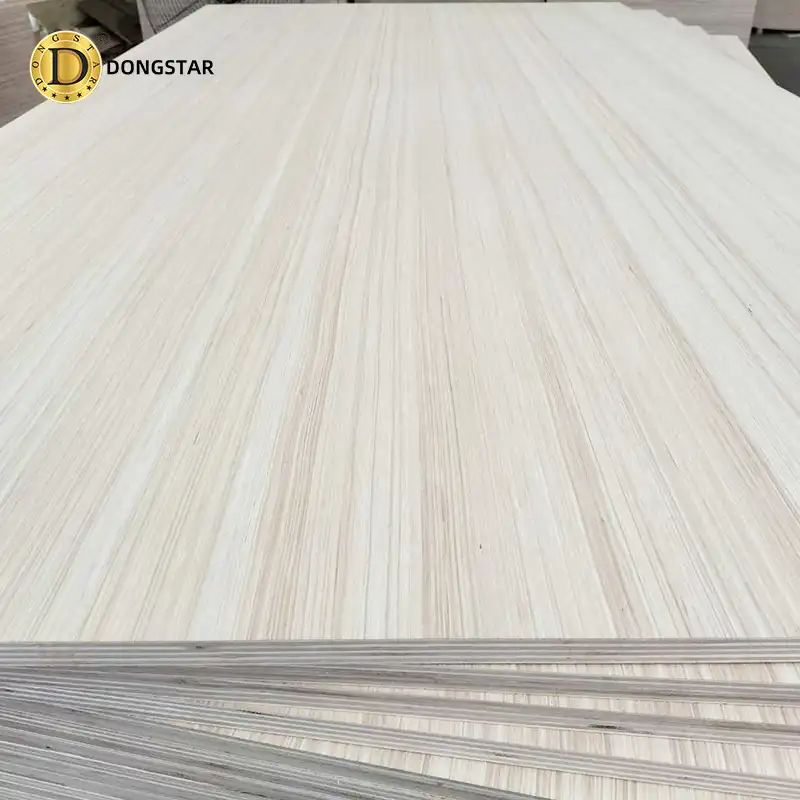
Commercial plywood is commonly available in 1220 × 2440 mm (4 × 8 ft) sheets, with other formats such as 915 × 1830 mm, 1250 × 2500 mm, 1220 × 3050 mm, and 1525 × 3050 mm. Typical thicknesses run from 3 mm to 25 mm, while 6, 9, 12, 15, and 18 mm are widely used for furniture, cabinetry, partitions, packaging, and interior work. A 5 × 10 ft panel provides 50 sq ft of surface area, 56.25% more than a 4 × 8 ft sheet. Buyers should specify finished thickness tolerance, veneer construction, adhesive class, surface grade, and intended use before ordering large quantities.
The 1220 × 2440 mm format remains common because its 2.98 m² surface area works well with standard panel saws, CNC routers, storage racks, pallets, and furniture production lines. A 1250 × 2500 mm sheet increases surface area to 3.125 m², about 4.9% more than a 1220 × 2440 mm panel, while requiring only a modest increase in handling space. That small dimensional change can affect component nesting when thousands of cabinet sides, shelves, drawer panels, or partitions are cut every month.
Sheet length becomes more important when the finished component is taller than 2440 mm. A 1220 × 3050 mm panel offers about 3.72 m², roughly 25% more area than a 1220 × 2440 mm sheet, and may allow a manufacturer to cut long door components or wall panels without joining two pieces. A 1525 × 3050 mm sheet reaches about 4.65 m², or approximately 56% more surface area than the common 4 × 8 ft format, but it also requires larger cutting tables, wider storage space, and suitable lifting equipment.
Thickness creates another set of choices because plywood with the same length and width can behave very differently in machining and assembly. Panels around 3-6 mm are often used for drawer bottoms, cabinet backs, decorative layers, lightweight packaging, and components that do not carry large bending loads. Panels around 9-12 mm are common for internal furniture parts, while 15-18 mm plywood is frequently used for cabinets, shelves, furniture frames, partitions, and general joinery. Moving from 12 mm to 18 mm increases nominal material thickness by 50%, which also changes weight, edge profile, screw length, machining depth, and package quantity.
Nominal thickness should not be treated as a guaranteed finished measurement. A sheet sold as 18 mm may finish slightly above or below that figure after veneer pressing, sanding, calibration, and moisture changes. European plywood specifications are often discussed alongside standards such as EN 315 for dimensional tolerances and EN 636:2012+A1:2015 for plywood requirements in different service conditions. A commercial order should therefore state both nominal thickness and the accepted tolerance instead of relying only on a product name such as “18 mm plywood.”
For machining, a difference of 0.5 mm can matter more than it appears on a purchase sheet. A groove designed for an 18.0 mm panel may fit poorly if repeated deliveries arrive at 17.4 mm or 18.6 mm, particularly when CNC routing, dowel drilling, edge banding, or press-fit assembly is used. Across 100 stacked sheets, a 0.6 mm difference per panel would create a theoretical stack-height difference of 60 mm, so factories producing repeat furniture programs normally confirm calibrated thickness before approving regular supply.
Ply construction also deserves attention because two panels with the same 18 mm nominal thickness can be built differently. One manufacturer may use fewer, thicker veneers, while another may use more, thinner layers. The finished thickness may be similar, but edge appearance, machining behavior, internal gaps, screw holding, and bending performance can differ. Buyers ordering 500 or 1,000 sheets for repeat production usually gain more useful information from a construction specification and sample approval than from thickness alone.
Face size should then be matched to the cutting plan rather than selected only because it is common in the market. A 1220 × 2440 mm sheet has an area of 2,976,800 mm². If a furniture component measures 600 × 800 mm, each piece uses 480,000 mm² before considering kerf and trimming. Six pieces require 2,880,000 mm², equal to about 96.7% of the raw sheet area in a purely mathematical layout, although actual yield will be lower after saw kerf, edge trimming, grain direction, defects, and nesting restrictions are included.
That calculation explains why a larger sheet is not automatically more economical. A factory cutting small repetitive parts may achieve good utilization from 1220 × 2440 mm panels, while a producer making tall cabinet sides may obtain a better cutting pattern from 1250 × 2500 mm or 1220 × 3050 mm sheets. Even a 3% improvement in usable yield becomes significant when 10,000 panels are processed, because the equivalent material saving corresponds to the surface area of about 300 full sheets before differences in grade and cutting loss are considered.
Panel size also affects transport planning. One 18 mm sheet measuring 1220 × 2440 mm contains about 0.0536 m³ of plywood volume, while a 1525 × 3050 × 18 mm sheet contains about 0.0837 m³, approximately 56.2% more volume per sheet. Actual transport weight depends on wood species, veneer composition, moisture content, adhesive, and panel density, so a shipping plan based only on sheet count can be misleading. Exporters normally calculate package height, pallet dimensions, gross weight, container limits, and unloading method together.
The same approach applies when comparing commercial plywood with products made for more specific site conditions. Black Film Faced Plywood is normally supplied with a phenolic film surface intended for formwork and other demanding construction uses, while ordinary commercial plywood is more often supplied with natural veneer faces for furniture, interior work, packaging, and general manufacturing. Both products may use familiar panel dimensions such as 1220 × 2440 mm, but surface treatment, glue system, density, edge sealing, reuse expectations, and application requirements are different.
Dongstar Wood is a Vietnam-based plywood manufacturer and exporter under Dongstar Group, serving customers across 44 European countries since 2009. We specialize in commercial plywood, film faced plywood, construction plywood, birch plywood, furniture plywood, and customized plywood solutions.
Backed by CE 2+, FSC®, EUDR, DOP, and SEDEX (BSCI) certifications, we meet European standards for quality, sustainability, and compliance. With over 15 years of manufacturing and export experience, we support importers, distributors, furniture manufacturers, and construction companies with reliable plywood supply and OEM/ODM solutions.
When dimensions move away from factory-standard production, buyers should also consider minimum order quantity and manufacturing setup. Custom dimensions can reduce offcuts for repeated OEM programs, but producing a non-standard press size or special trimming pattern can add setup requirements. For a project consuming 20,000 identical components per year, reducing average plywood loss from 15% to 11% would cut raw-sheet consumption associated with waste by about 26.7%, assuming component output and material quality remain unchanged.
A practical purchasing specification can therefore be written as a full dimensional line rather than a short product label:
-
1220 × 2440 × 18 mm commercial plywood
-
calibrated or sanded thickness, with agreed tolerance
-
specified face and back grade
-
stated core veneer species or core composition
-
required adhesive class and intended service condition
-
agreed moisture and emission requirements where applicable
-
packing quantity, pallet dimensions, and gross-weight limits
-
inspection criteria approved before mass production
The dimensional line should be connected to inspection procedures because size variation can occur between batches. For an order of 1,000 sheets, checking only one panel gives information about 0.1% of the shipment, while a structured sampling plan gives a more useful picture of thickness, squareness, surface condition, and edge quality. Measurement points should include more than the center of the sheet because sanding and pressing can create small differences across the panel surface.
Squareness and diagonal measurement also matter when sheets move into automated cutting. A nominal 1220 × 2440 mm board has a theoretical diagonal of about 2727.6 mm. If opposite diagonals differ noticeably, rectangular components may need additional trimming before machining. That extra trimming reduces usable area even when the nominal length and width appear correct, so dimensional inspection should cover length, width, thickness, diagonals, edge condition, and flatness rather than a single measurement.
Common purchasing choices can be compared more clearly by looking at size, area, and likely use:
| Panel size | Surface area | Difference vs. 1220 × 2440 mm | Common use |
|---|---|---|---|
| 915 × 1830 mm | 1.67 m² | -43.9% | Small furniture parts, packaging |
| 1220 × 2440 mm | 2.98 m² | Reference | Furniture, cabinetry, interiors |
| 1250 × 2500 mm | 3.13 m² | +4.9% | Furniture and industrial cutting |
| 1220 × 3050 mm | 3.72 m² | +25.0% | Tall components, doors, panels |
| 1525 × 3050 mm | 4.65 m² | +56.2% | Large-format fabrication |
Thickness can be compared in the same way. A 6 mm panel uses one-third of the nominal wood volume of an 18 mm panel with the same face dimensions, while a 25 mm panel contains about 38.9% more nominal volume than an 18 mm panel. Freight cost per sheet, manual handling, package count, cutting speed, fastener length, and storage capacity therefore change as thickness changes, even before veneer species or density is considered.
For distributors and furniture manufacturers, ordering by application usually produces a more accurate specification than ordering by familiar size alone. A 2440 mm-high cabinet program may fit standard sheets well, while a 2500 mm architectural panel can require a longer board to avoid adding a joint. A shelving program may use 18 mm plywood, while drawer bottoms may need only 6 mm. Matching sheet dimensions, thickness, construction, tolerance, and cutting layout before purchase gives buyers measurable information for comparing quotations from different suppliers.