M15 Motor Integration for Indoor and Outdoor Inspection Robots
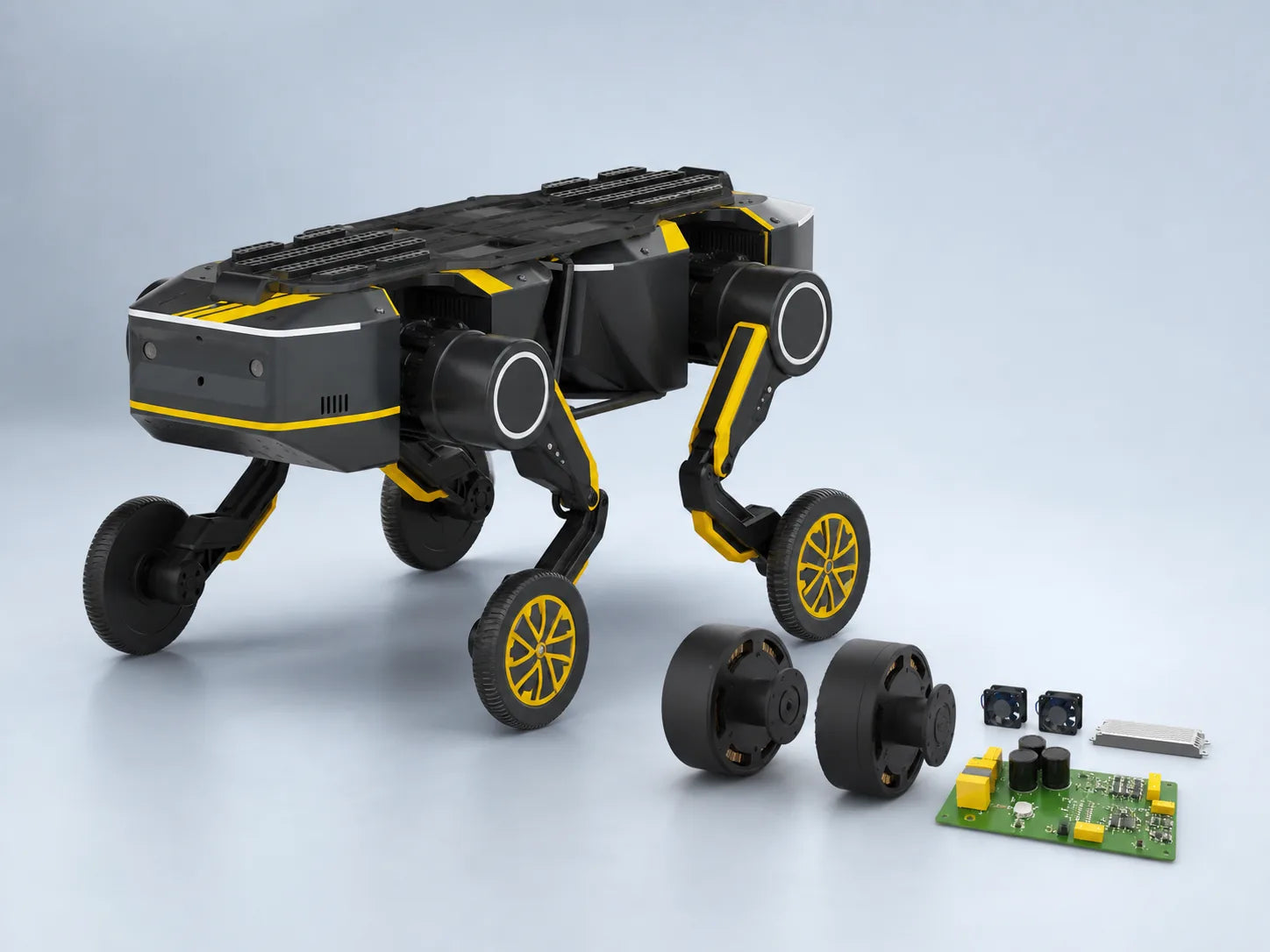
M15 motor integration improves inspection robot performance through compact design, precise speed control, and stable operation in different environments. With applications covering factories, warehouses, energy facilities, and outdoor infrastructure, the motor supports robotic platforms requiring high torque density, long service life, and efficient power use. Systems using industrial robot drive motors can achieve smoother movement, lower maintenance frequency, and more reliable inspection results.
Inspection robots are being used in more locations where manual checks are difficult, repetitive, or time-consuming. Indoor robots operate in manufacturing plants, logistics centers, laboratories, and commercial buildings, while outdoor robots are used for solar farms, pipelines, power equipment, and transportation facilities. A 2023 industrial automation report showed that mobile robots can reduce routine inspection labor requirements by more than 30% in structured environments when combined with automated navigation and sensor systems.
The motor system directly affects how accurately a robot can move, stop, and collect data. The M15 motor is designed for robotic platforms that require controlled motion, compact installation, and stable output under changing loads. Its design supports applications where robots carry cameras, LiDAR sensors, thermal imaging devices, and other inspection equipment while maintaining consistent movement.
Inspection robots often complete thousands of movement cycles during daily operation. A motor that maintains stable torque output after repeated acceleration and braking cycles helps maintain consistent inspection paths and reduces the need for frequent mechanical adjustments.
Indoor environments require motors with smooth operation and accurate positioning. In factories and warehouses, robots may travel through narrow aisles, pass near workers, and stop at fixed inspection points. Small positioning errors can affect image quality or sensor readings, especially when cameras or measurement devices require a fixed distance from equipment surfaces.
The M15 motor provides controlled rotation and responsive speed adjustment, allowing robots to move at low speeds while maintaining accurate positioning. Encoder-based feedback systems can improve motion control resolution, with many industrial robotic platforms achieving positioning accuracy within millimeter-level ranges depending on mechanical design and control algorithms.
Outdoor inspection creates additional requirements because robots must operate under changing weather and terrain conditions. Surfaces may include concrete, gravel, metal platforms, slopes, and uneven ground. Motors must provide sufficient torque during climbing, starting, and carrying additional equipment.
The M15 motor structure supports stable operation under variable mechanical loads. Its compact size allows manufacturers to integrate the motor into wheeled robots, tracked vehicles, and customized inspection platforms without requiring large installation spaces.
| Application environment | Motor requirements | M15 integration advantages |
|---|---|---|
| Manufacturing facilities | Low vibration, accurate positioning | Smooth speed control |
| Warehouses | Long operating cycles | Efficient power consumption |
| Solar inspection | Outdoor durability | Stable performance in changing conditions |
| Infrastructure inspection | High torque output | Reliable movement on uneven surfaces |
Power efficiency has become an important factor for battery-powered inspection robots. Many autonomous robots operate for several hours before returning to charging stations. According to robotics industry data from 2024, improving motor efficiency by 5%–10% can extend operating time and increase inspection coverage without increasing battery size.
The M15 motor focuses on efficient electrical conversion and reduced energy loss. Lower energy consumption allows robot manufacturers to design smaller battery systems or extend operation periods using the same battery capacity. This is especially useful for outdoor robots that need to complete long inspection routes without frequent charging.
Thermal performance also influences motor reliability. During continuous operation, electrical energy is converted into mechanical output while generating heat. Excessive temperature increases can reduce component lifespan and affect performance consistency.
The M15 motor uses engineering approaches that support heat management during extended operation. Proper thermal design helps maintain stable output when robots perform repeated inspection tasks, such as monitoring industrial equipment over multiple hours.
A reliable inspection robot requires more than movement capability. The motor must provide consistent torque, predictable response, and stable operation throughout repeated inspection cycles.
Mechanical durability is another consideration for industrial applications. Inspection robots are often expected to work continuously in environments where maintenance access is limited. Bearings, housing structures, sealing methods, and internal components must withstand repeated mechanical stress.
The M15 motor is suitable for integration into systems requiring long service intervals. Its design supports manufacturers developing robots for industrial inspection, facility monitoring, and automated maintenance applications.
Modern inspection robots also depend on accurate sensor data. Movement vibration, sudden speed changes, or unstable positioning may reduce the quality of collected information. Smooth motor control helps cameras capture clearer images and allows sensors to maintain stable measurement conditions.
Integration flexibility allows the M15 motor to support different robot architectures. Whether used in differential-drive platforms, autonomous mobile robots, or specialized inspection vehicles, the motor can be combined with controllers, gear systems, and feedback devices according to specific application requirements.
Manufacturers selecting industrial robot drive motors need to consider factors including torque output, efficiency, installation size, environmental resistance, and control compatibility. The M15 series provides a practical option for robotic systems that require a balance between compact structure and dependable performance.
The development of intelligent inspection systems continues to increase demand for reliable motion components. Between 2020 and 2025, the global adoption of autonomous mobile robots expanded across manufacturing, logistics, and infrastructure sectors, with many systems moving from simple transportation tasks toward inspection and monitoring functions.
As robots become responsible for more detailed inspection activities, motor technology must support higher accuracy, longer operating periods, and easier system integration. The M15 motor provides a foundation for indoor and outdoor inspection robots by combining efficient operation, precise control, and mechanical reliability across different working conditions.